Why Do Restaurants Go Bust When They’re Full?
27 October 2026
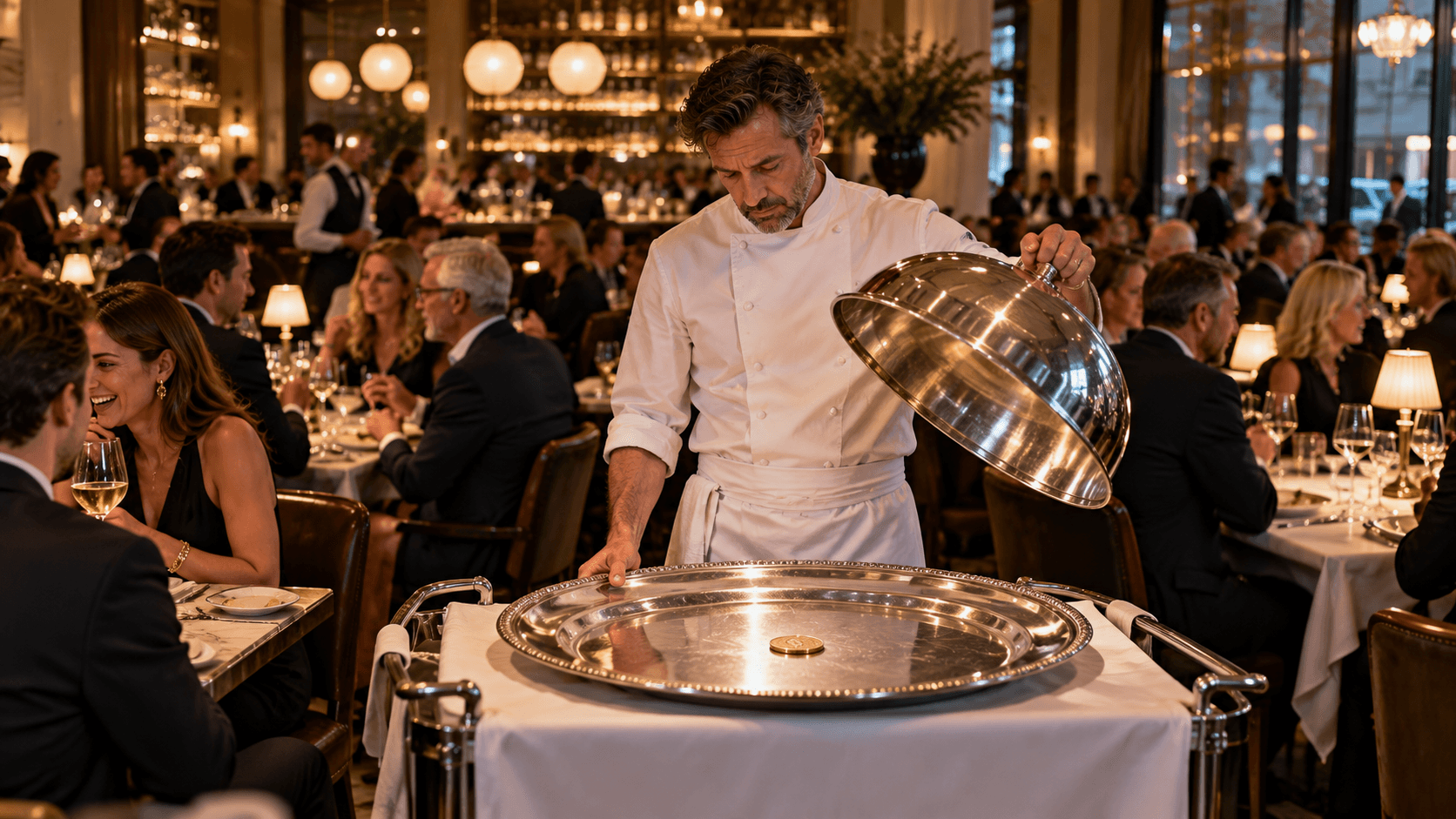
A packed restaurant looks like a successful business. The tables are full. The bar is busy. There is a queue outside on a Saturday night. Staff are running around. The kitchen is producing food at a rate that suggests somebody, somewhere, must be making a fortune.
Then, a few months later, the restaurant closes. The windows are covered. A short statement appears online thanking customers for their support. And everyone says the same thing. “But it was always busy.”
Busy and profitable are not the same thing. That is the brutal reality of the restaurant business.
A restaurant can be full of customers and still be losing money. In fact, being busy can sometimes make a bad financial model worse. More customers mean more revenue, obviously. They also mean more food, more staff hours, more electricity, more waste, more breakages and more pressure on a business already operating with very little room for error.
The mistake is assuming that money coming in is the same as money being made. It is not.
Imagine a restaurant takes £100,000 in a month. Sounds healthy. But before the owner sees a penny, there is rent, business rates, wages, employer costs, ingredients, utilities, insurance, licences, card-processing fees, cleaning, repairs, marketing, accountants and tax.
Then something breaks. Something always breaks.
A fridge fails. The dishwasher needs replacing. A chef leaves. Food prices rise. The landlord increases the rent. A quiet January arrives immediately after an expensive Christmas.
Suddenly, that £100,000 does not look quite as impressive.
Restaurants are particularly exposed because their costs are relentless. Rent does not care whether Tuesday lunch was quiet. Staff need paying. Suppliers need paying. Energy companies need paying.
And customers, unfortunately, have developed a fairly strong preference for paying roughly the same price for a meal even when everything required to produce it has become more expensive.
That creates an awkward problem. You can be popular and underpriced. In business, popularity is nice. Margins are better.
This is where many restaurants get trapped. Raising prices risks upsetting customers. Keeping prices low attracts customers but leaves less money from every table. The owner can look around a packed dining room and still know that they need another good Saturday simply to cover the bad Tuesday.
Then there is the issue of capacity. A restaurant only has so many tables. Once they are full, that is it.
Unlike a software company, which might sell another thousand subscriptions without needing another thousand offices, a restaurant generally has to add more seats, more staff or more locations to grow significantly.
Each brings new costs. Growth is not automatically the solution.
Opening a second restaurant can double the opportunity and considerably more than double the problems. Suddenly, the owner is not running one kitchen. They are managing two sets of staff, two properties, two supply chains and two businesses capable of having a disastrous Friday night.
The irony is that a full restaurant can occasionally hide its problems.
Owners are busy serving customers rather than looking closely at the numbers. Revenue looks strong, so there is an assumption that everything must be fine. But turnover can be one of the most flattering numbers in business.
It tells you how much money passed through the company. It does not tell you how much stayed.
A restaurant turning over £2 million and making almost nothing is not necessarily in better shape than a smaller restaurant turning over £700,000 with healthy profits.
The same principle applies far beyond hospitality. Businesses can be busy and broke. They can have lots of customers and terrible customers. They can grow revenue while destroying margins. They can celebrate sales records while quietly running out of cash.
That is why the most dangerous business question is often: “How busy are we?”
It sounds sensible. The better question is: “Are we making enough money from being busy?”
Customers are not automatically profitable. Revenue is not automatically cash. Growth is not automatically success. And a full restaurant is not necessarily a healthy business.
Of course, the opposite is true too. A half-empty restaurant is unlikely to survive for long, no matter how good its margins are. Customers still matter. Volume still matters.
The trick is understanding the difference between looking successful and actually being successful.
Because a packed dining room makes a good photograph. A healthy profit-and-loss account is considerably less glamorous.
But when the lights go out, only one of them pays the bills.